

The Essential Guide to Dining Table Sizing and Seating Capacity
Choosing a dining table is about more than just style; it’s about spatial harmony. A table that is too large makes a room feel cramped, while one that is too small can look lost and feel impractical for hosting.
This guide breaks down the "Golden Rules" of dining dimensions to help you find the perfect fit for your home.
The Golden Rules of Clearance
Before looking at the table itself, you must measure your room. To ensure guests can sit down and get up comfortably, follow these standard clearances:
The 36-Inch Rule: Maintain at least 36 inches between the edge of your table and the walls or other furniture. This allows enough room for chairs to be pulled out and for people to walk behind seated guests.
The 48-Inch Rule: If you want a more spacious, high-end feel or have a main traffic path running through the dining area, aim for 48 inches of clearance.
Elbow Room: Each person requires about 24 inches of horizontal space to eat comfortably without bumping elbows.
2. Seating Capacity by Table Shape
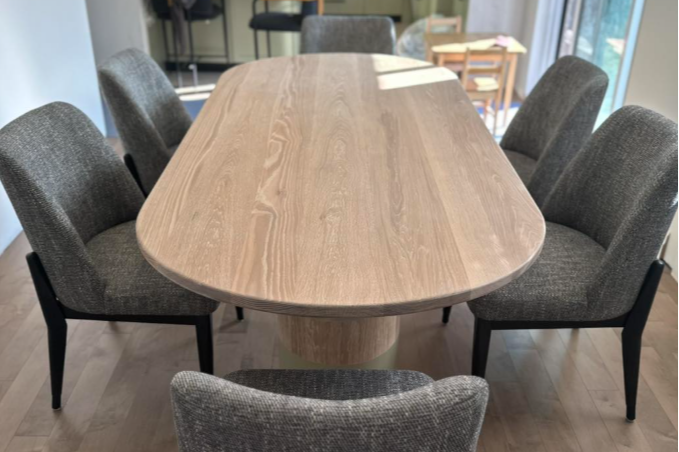
Rectangular and Oval Tables
Rectangular tables are the most popular for formal dining rooms. They are ideal for seating large groups (six or more).
Table Length Seating Capacity
48 – 60 inches 4- 6 People
60 – 72 inches 6-8 People
80 – 96 inches 8-10 People
102 – 120 inches 10–14 People
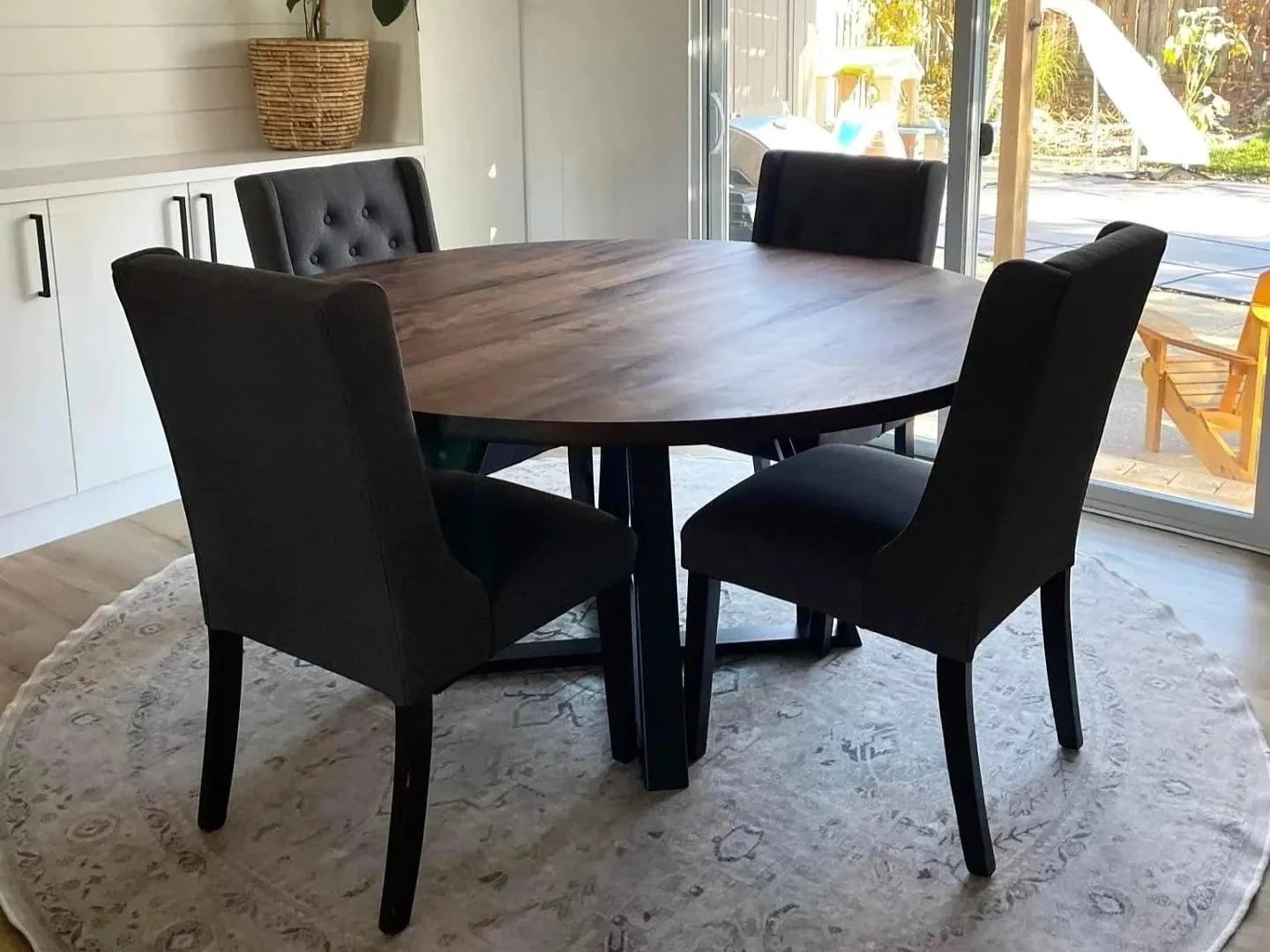
Round Tables
Round tables are perfect for small spaces and encourage conversation since everyone faces each other. However, very large round tables (over 72 inches) can make it difficult to reach food in the centre.
Table Diameter Seating Capacity
36 – 48 inches 3-5 People
48 – 60 inches 4-7 People
60 – 72 inches 5-8 People
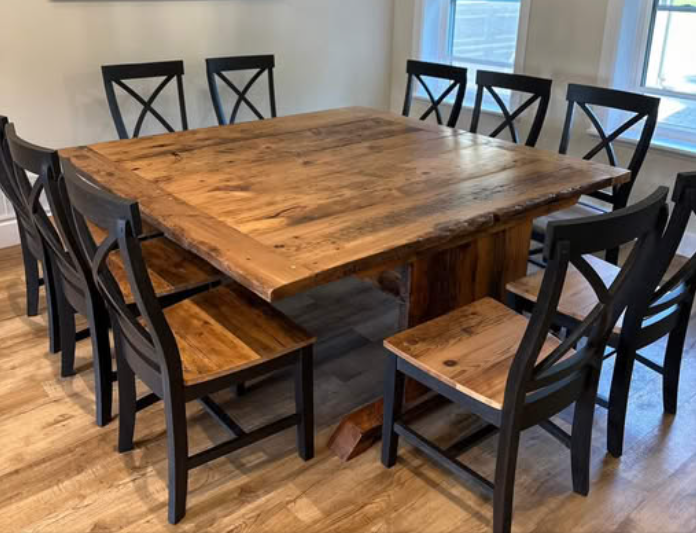
Square Tables
Square tables offer a modern look and work best in square-shaped rooms. If you often host large groups, consider two square tables that can be pushed together to create a long rectangular surface.
Table Diamater Seating Capacity
36 – 48 inches Seats 4 people comfortably.
48 – 60 inches Seats 8 people (two per side).
60 – 72 inches 8-10
5. The Magic of Expansion Tables: Flexibility for Any Occasion
The dilemma: You need a compact table for daily use but a grand banquet table for holidays and dinner parties. The solution: an extendable dining table.
These clever pieces of furniture transform to meet your needs, offering the ultimate in spatial flexibility. Here’s a breakdown of the most common mechanism types and what they mean for your space.
Types of Expansion Mechanisms
Butterfly Leaf: This is a modern favorite for its convenience. The extension leaf is hinged in the center and folds in half, storing neatly beneath the tabletop itself.
Pros: No need to find separate storage closet space for the leaf. It's usually a one-person job to open and close.
Cons: The seam down the middle of the table is visible when the table is closed.
Drop-Leaf: A classic design perfectly suited for small apartments and breakfast nooks. Hinged panels on the sides of the table fold down flat against the legs when not in use.
Pros: Extremely space-saving when folded. Can be positioned against a wall like a console table.
Cons: When the leaves are down, legroom at the sides can be restricted. The table surface is often narrow when folded.
Removable (Insert) Leaf: This is the traditional method where you physically take the leaf off of the ends or pull the table apart at the center and insert one or more separate leaves.
Pros: Often allows for the greatest expansion, sometimes adding two or more leaves to seat 12+ people. The table has a clean, seamless look when closed.
Cons: You need to have a closet or storage area elsewhere in your home to keep the large, heavy leaves when they aren't in use.
How Much Seating Does a Leaf Add?
As a general rule of thumb, a standard 18-inch to 24-inch leaf will comfortably add seating for two extra people (one on each side).
A 60-inch table (seats 6) with one 18-inch leaf becomes a 78-inch table (seats 8).
Some large tables can accept two or even three leaves, transforming an 8-person table into a 12 or 14-person dining surface.
Pro-Tip: When measuring your room for an extendable table, always measure for the fully extended size. Ensure you still have that crucial 36 inches of clearance around the table when it's at its largest, so your holiday guests aren't trapped in their seats.
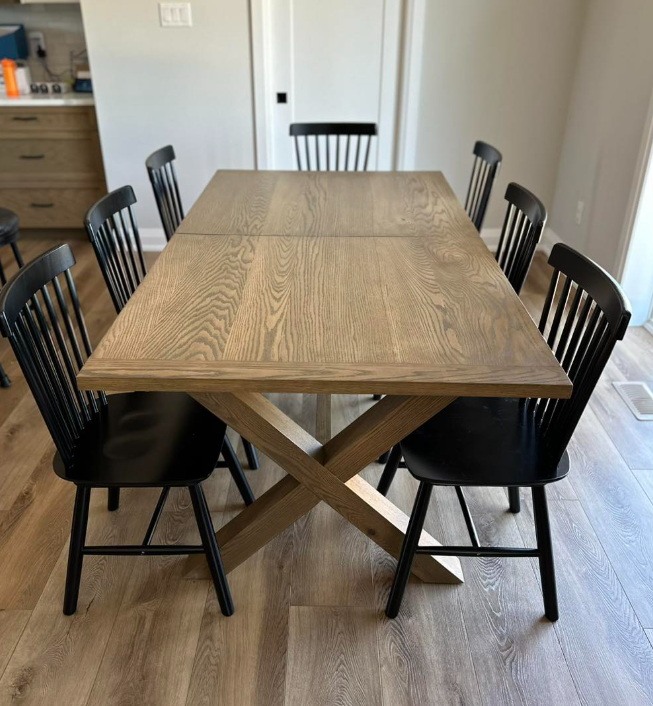
Expansion table, seats 6-8 and then opens to seat 8-10
4. Standard Table Heights
While width and length vary, heights are relatively standardized in the furniture industry:
Standard Dining Height: 28 – 30 inches. (Pairs with 18-inch chairs).
Counter Height: 34 – 36 inches. (Pairs with 24-inch stools).
Bar Height: 40 – 42 inches. (Pairs with 30-inch stools).
5. Pro-Tips for Choosing the Right Size
Consider the Legs: Pedestal tables allow for more legroom and make it easier to "squeeze in" an extra guest because there are no corner legs in the way.
The Rug Rule: If you have an area rug, it should be at least 24–30 inches wider than the table on all sides so the chair legs don’t get caught on the edge when guests pull them out.
Visual Weight: In a small room, a glass-top table or a table with thin tapered legs can make the space feel larger by keeping sightlines open.
Why Getting the Size Right Matters
A well-proportioned dining table becomes the heart of the home. By following these dimensions, you ensure that your dining area isn't just a showroom, but a functional space for making memories.
We can build any size and style of table youd like it just starts with an idea! please reach out here to get started with your vision !